Clinical image quality is an engineering discipline.
Surgeons don't tolerate ghosts, reflexes or dim NIR channels. We engineer the imaging and illumination optics of medical devices together — and prove them through prototypes before your clinical pilot does.
Optics for devices that touch patients
- Fluorescence imaging systems — dual-band VIS–NIR paths, channel crosstalk control
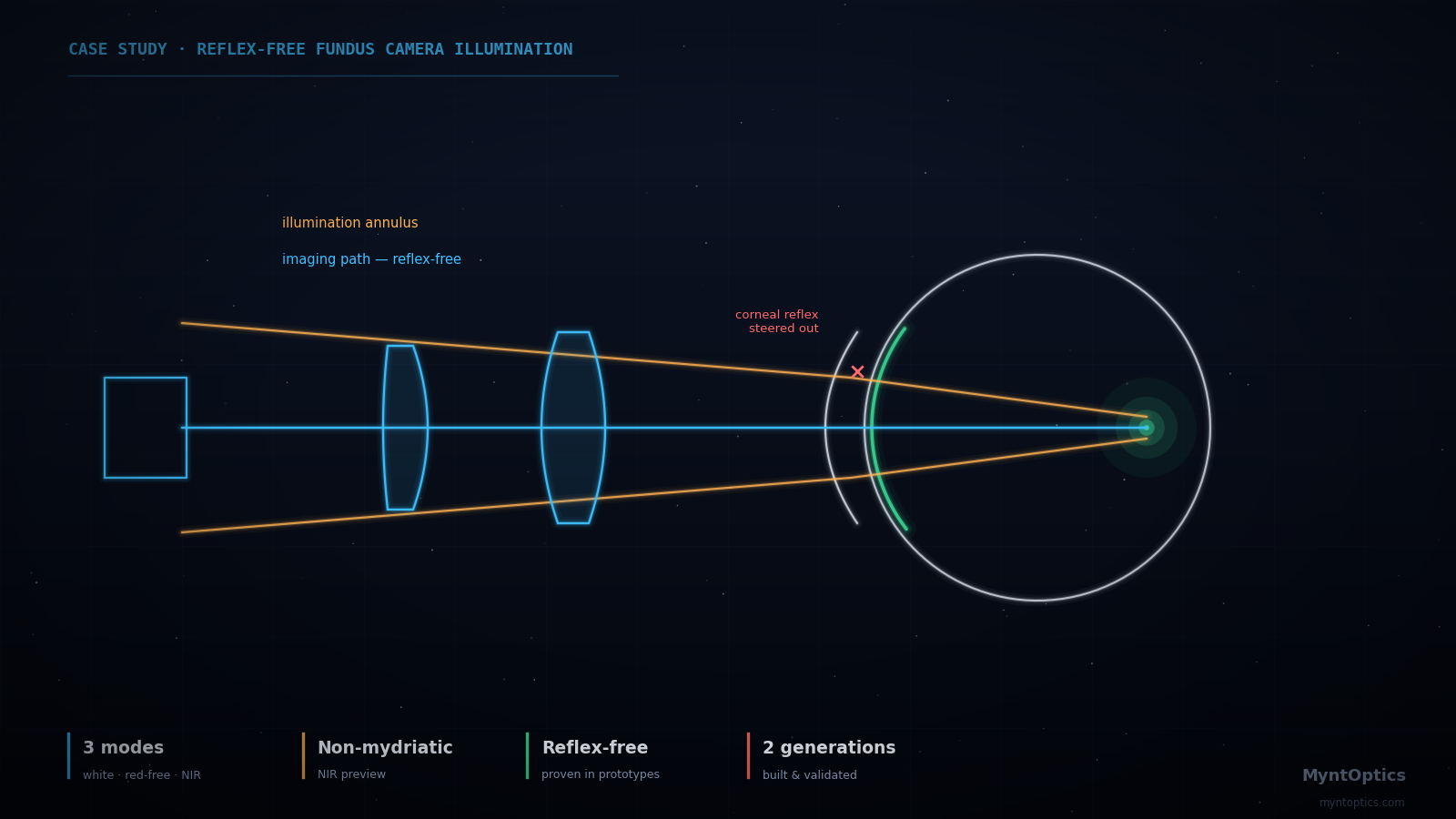
- Ophthalmic imaging — fundus cameras, reflex-free illumination, corneal reflex suppression
- Custom oculars & eyepieces — wide apparent fields with surgical eye relief
- Endoscopic & probe optics — miniature relays, illumination integration
- Optical sensor heads — stray light and crosstalk redesign for SNR
- Loupes & visualization — magnification systems engineered for all-day clinical use
Medical optics programs we've delivered
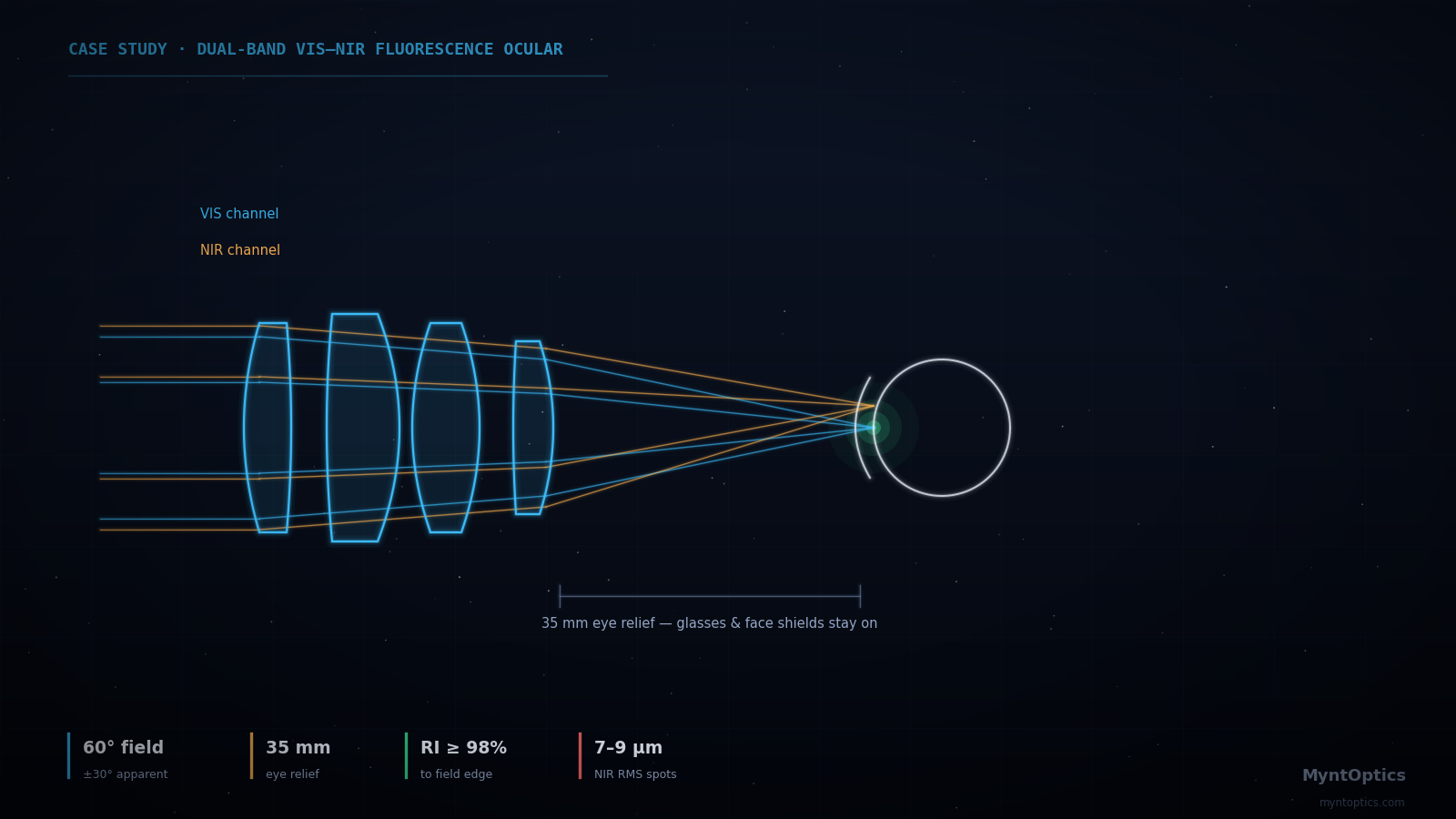
Dual-band VIS–NIR fluorescence ocular
60° apparent field, 35 mm eye relief, ≥98% relative illumination across both channels.
Read →Reflex-free portable fundus camera
Illumination and imaging co-design validated through prototypes capturing clean retinal images.
Read →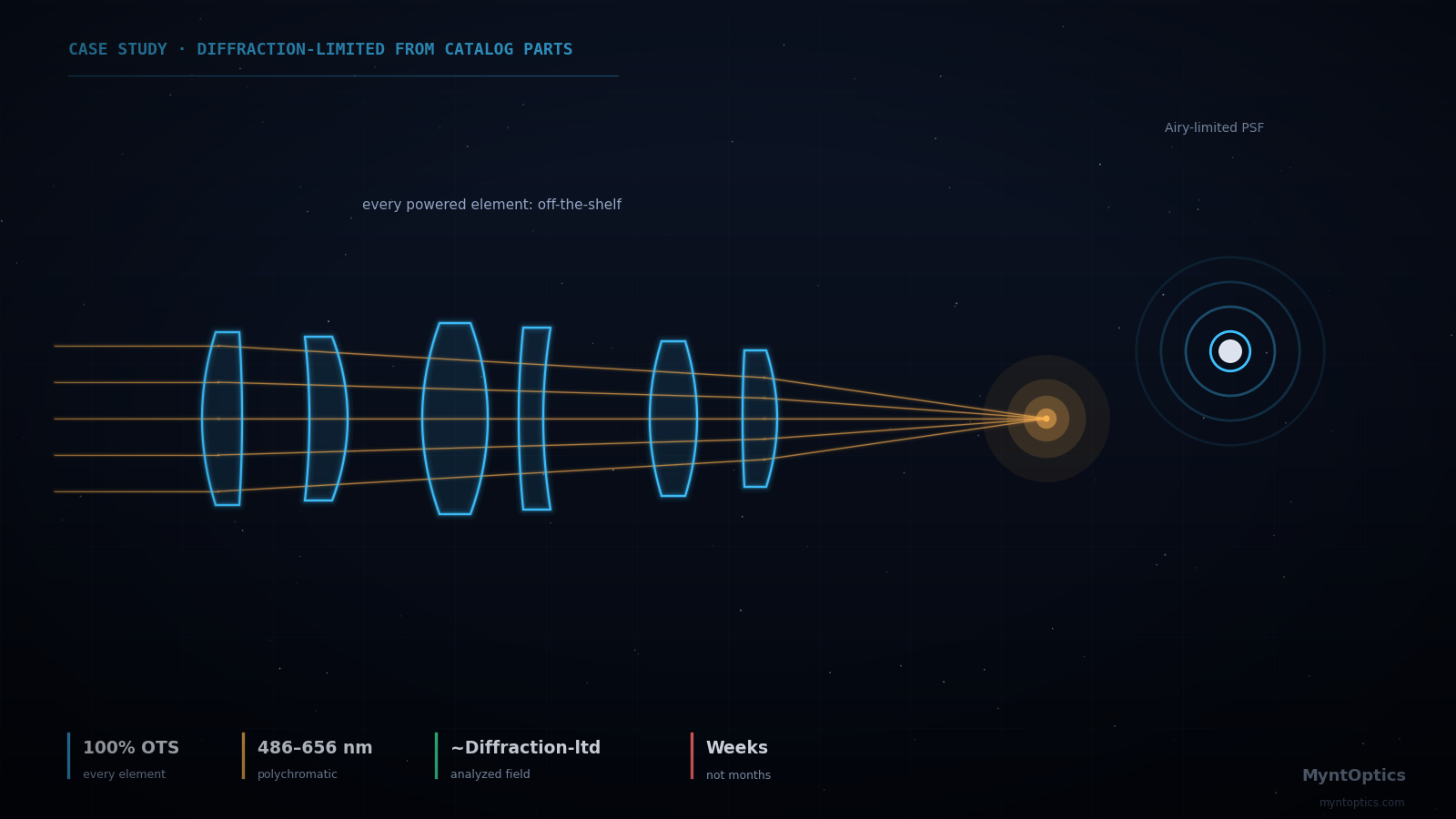
Diffraction-limited optics from catalog parts
Near-diffraction-limited imaging from off-the-shelf lenses — months of lead time and custom-glass cost avoided.
Read →Medical optics questions
Our imaging channel works but the NIR fluorescence channel is dim — can you fix it?
This is one of the most common problems we see: designs optimized for the visible that quietly lose the NIR band to coatings, glass absorption and relative-illumination falloff. A design audit quantifies exactly where the photons go, then we redesign the weak links — often without touching the whole system.
Can you get us to a clinical prototype quickly?
Often, yes — by designing around catalog components first where physics allows (see the catalog-optics case study) and reserving custom glass for where it genuinely pays. Working prototypes beat perfect paper designs in front of clinicians and investors.
Do you understand medical device development constraints?
Yes — traceable requirements, design-history-file-ready documentation, verification evidence and change control. We deliver engineering artifacts your quality system can consume directly.
Optical risk in your device program?
A fixed-scope optics diagnostic converts "we think the optics are fine" into engineering certainty — before your clinical pilot finds out otherwise.